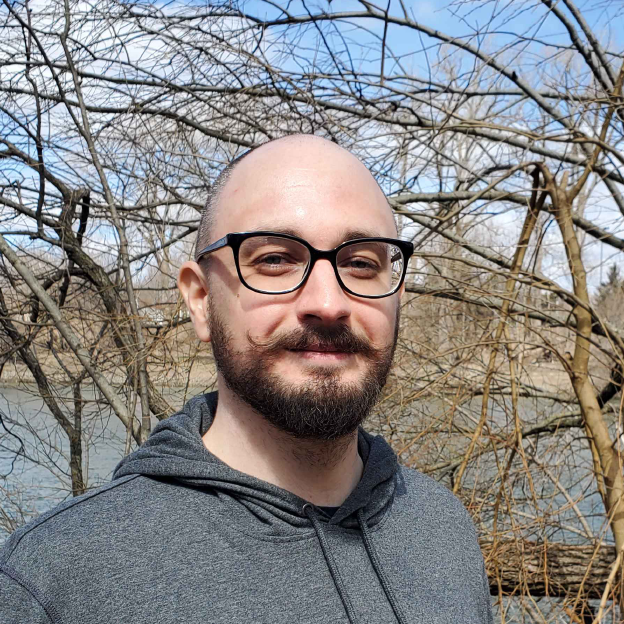
Oh hi, I'm Kyle
I'm a game designer with 9 years of industry experience. I love working on every aspect of game development, with designing gameplay systems and content for engaging and thrilling experiences is my favourite aspects.
Check out some of the games I've worked on below!

Professional Work
Ember Knights
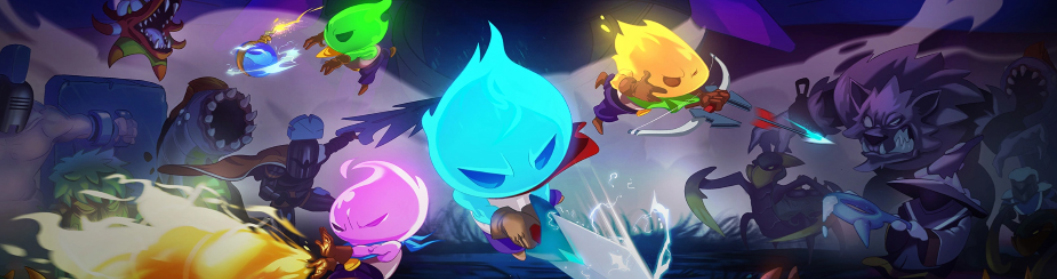
Early Access April 2022, 1.0 Release July 2023
Released on Steam, Nintendo Switch, Xbox, Playstation
Lead Designer
System / Level / Enemy / Character Design
Gameplay Programmer
UI/UX Design
Core System Design
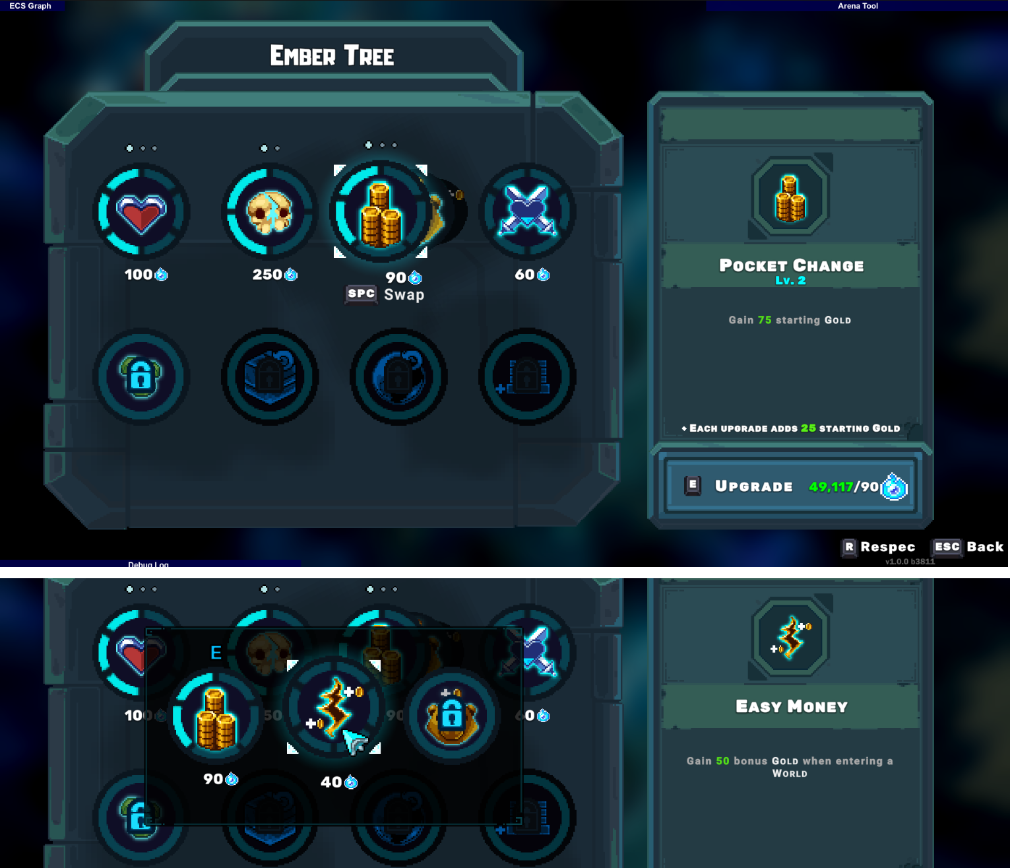
- Ember Tree permanent progression system and 15+ upgrades
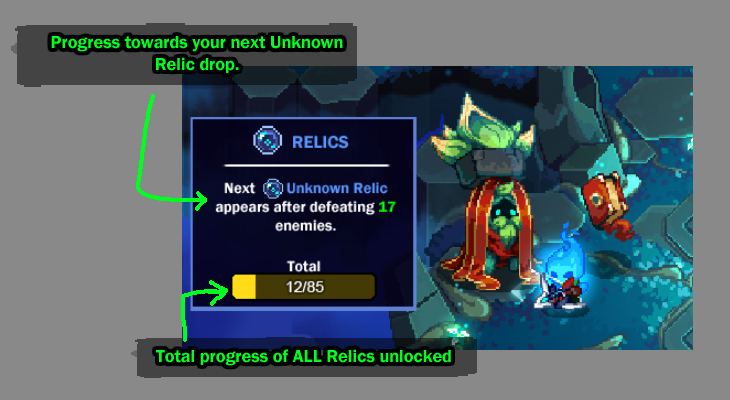
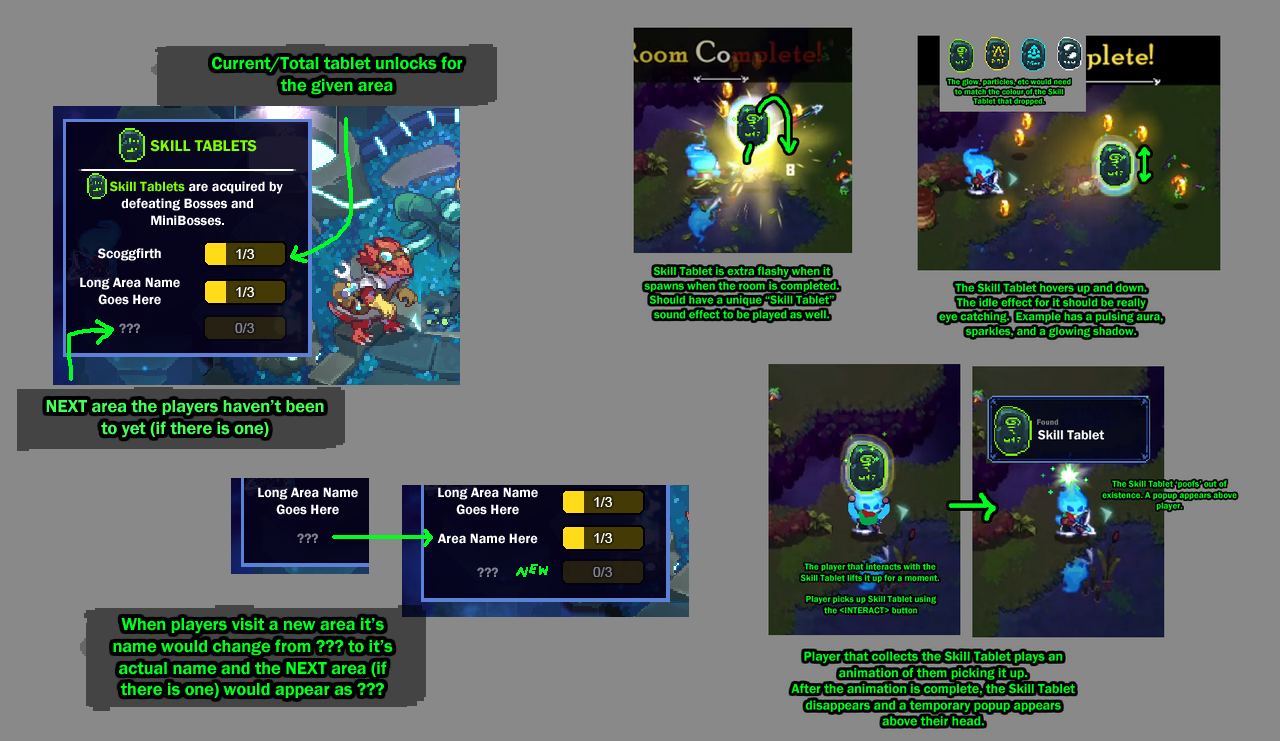
- Weapon, Skill, and Relic unlock systems
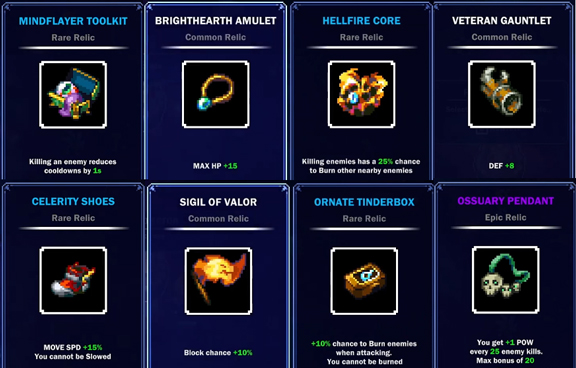
- 'Trigger and Effect' Relic combo system and 37+ Relics
- Weapon Modification system to customize weapons, 45+ modifications, and the gameplay challenges to acquire their unlock currency
- Enemy dynamic spawning logic
- 'Praxis' system where the main villain follows the player through their run, summons more challenges, verbally taunts them, and more
- Lead designer for 3 weapons, contributed to design of all 6
- 52 enemies with distinct behaviours and 14 intense Boss fight
- Room and enemy encounter design for all 6 areas of the game
- Designing, playtesting, and iterating all aspects gameplay and progression systems
- Additional programming for enemies, bosses, characters, weapons, relics, and more
- Lead the development team during the 1 year Early Access period
- Story progression, character and dialogue writing, and blocking out all the cutscenes
- Collaborated on the settings / themes for the 6 areas of the game
Action rogue-lites are one of my favourite game genres, so it was really exciting to be able to come up with our own ideas for intense gameplay, mechanics, and special moments for players to experience.
Ember Knights became the biggest project we made at the studio and the biggest project I had worked on at the time. My skillset was also broad enough that I ended up working on nearly every aspect of the game in some form.
Big Bosses
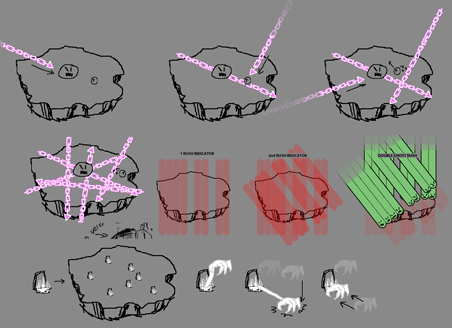
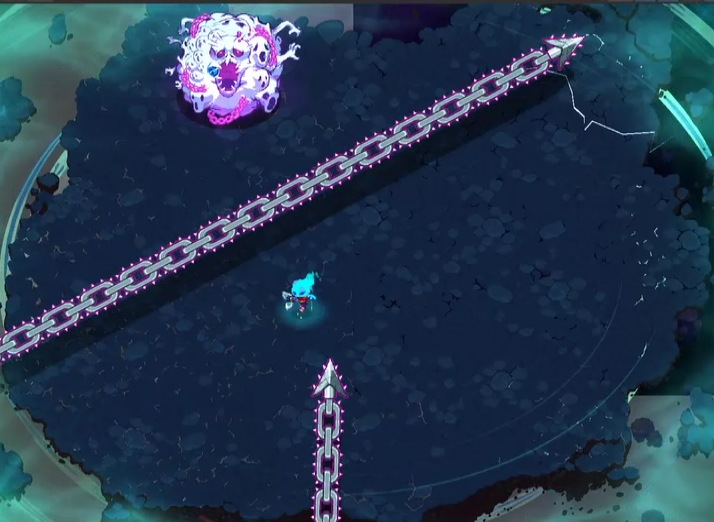
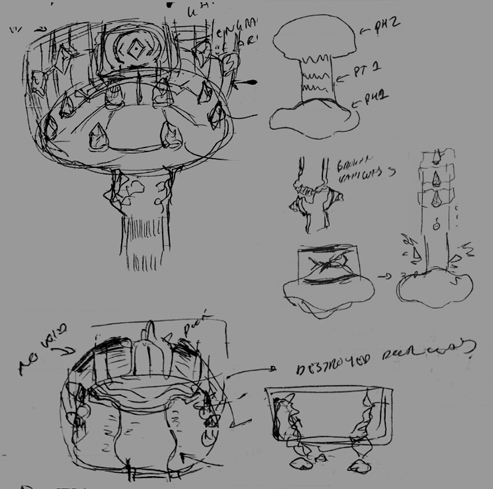
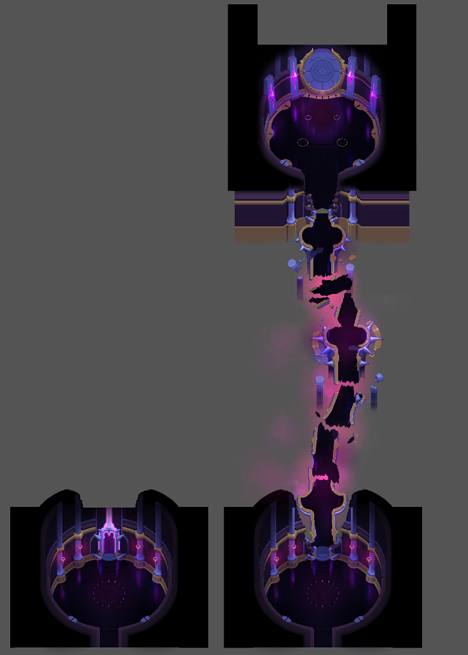
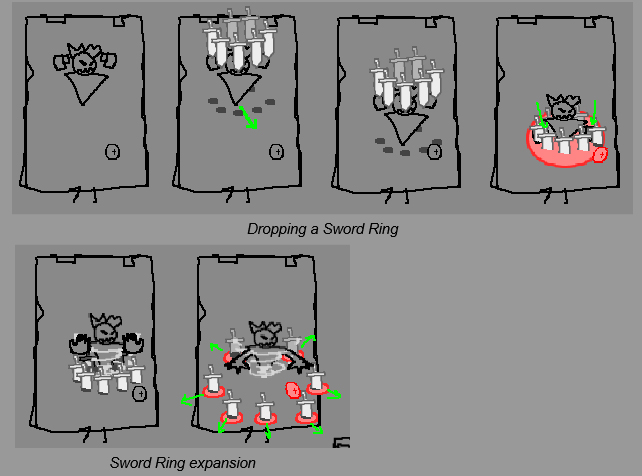
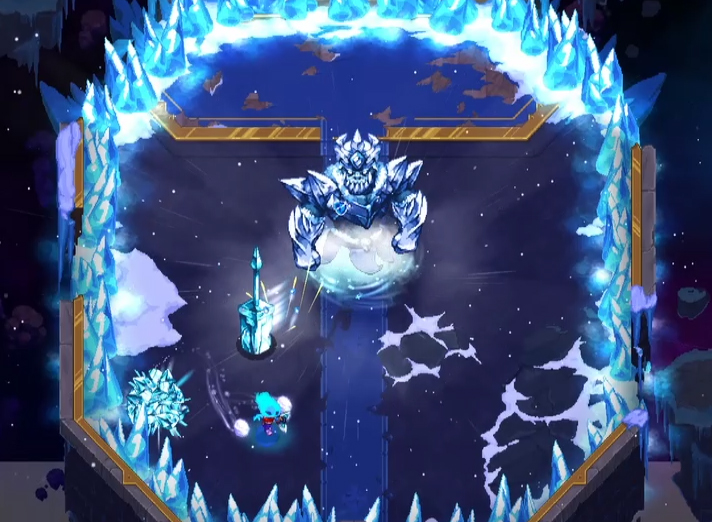
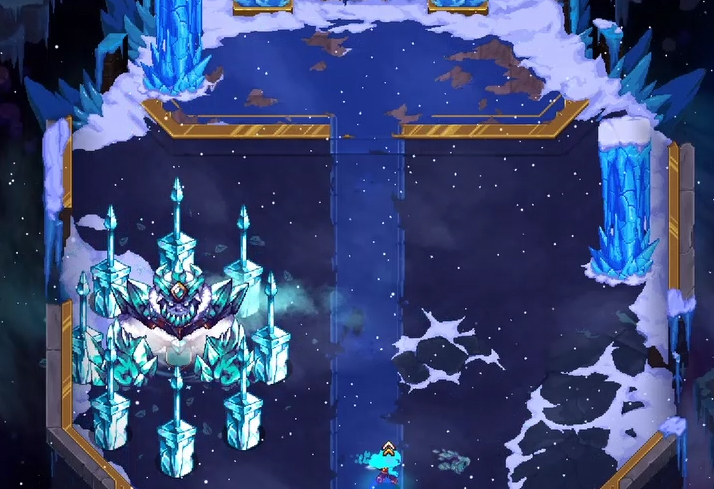
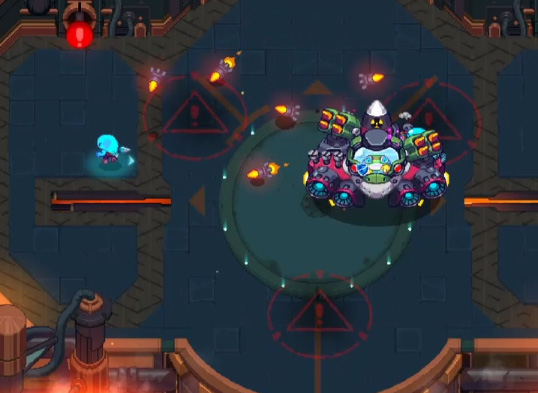
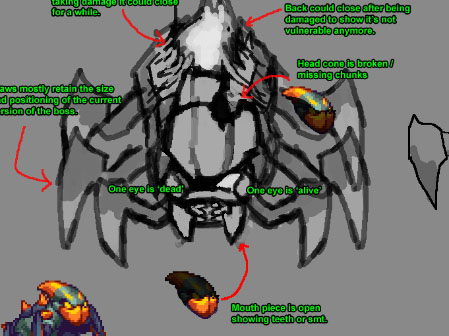
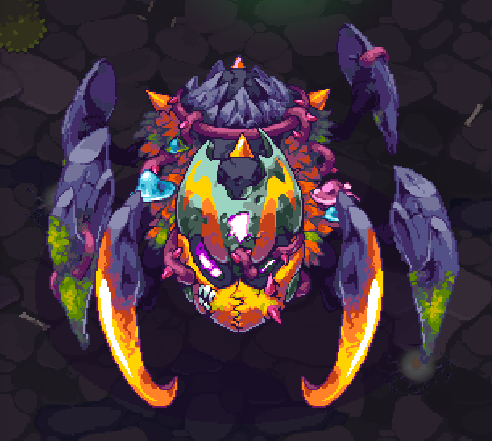
My favourite part of working on Ember Knights was designing the Boss encounters since they allowed for more elaborate encounters. I wanted each boss fight to have a balance of actions that fit their theme, that tested the player’s skills, and had a level of spectacle to them.
Each boss would end up with a good mix of actions that required the player to pay attention and ones that were there to cool and impactful.
Playtesting and balance came down to making sure every attack was fair, that it had appropriate cues, anticipation, and collision, then tweaking values like damage, speed, duration, etc. When the values were adjusted and I could beat the boss without getting hit, I felt it was in a good spot.
Design Challenges
The most challenging time for Ember Knights was after we had launched our first public demo. We identified some pretty significant issues to solve:- All player progression was in a single system and was too constrictive for players and for design
- Our in-run progression from Relics didn't provide enough meaningful gameplay changes and weren't fun
- Level exploration was tedious, and combat rooms were cramped and very samey, and they didn't support 4 players very well
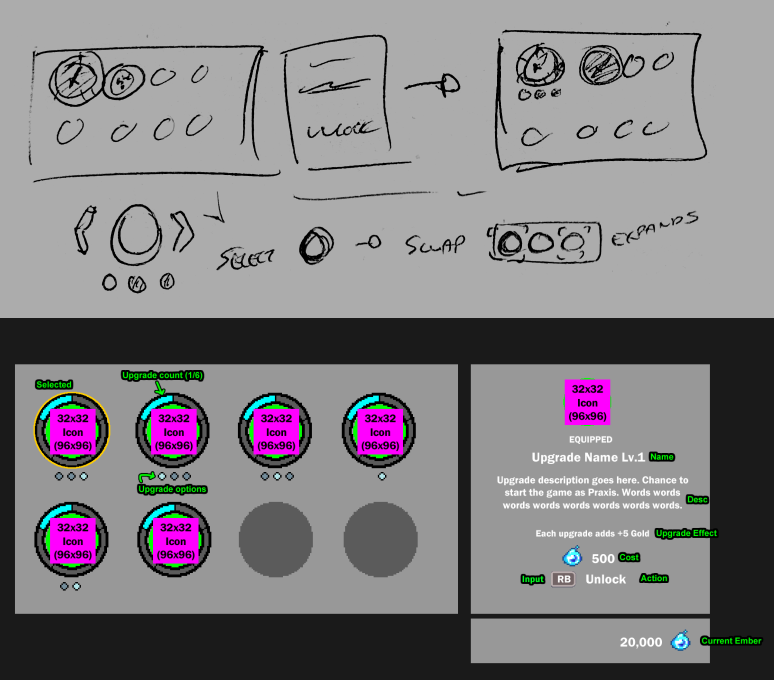
For player progression we broke it out into multiple systems. Permanent bonuses could be purchased/upgrades with a meta currency, divided into tiers where only 1 bonus would can be active at a time. New Relics -- in-run progression -- were automatically unlocked via defeating cumulative enemies. New abilities were unlocked by defeating MiniBosses and Bosses. New weapons were unlocked automatically by accumulating the meta currency, but didn't require it to be spent. These changes let us better control the pacing and order of unlocks, and also have the player multiple goals to work towards at one time.
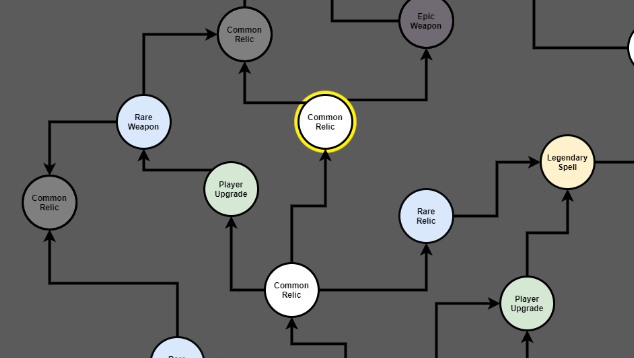
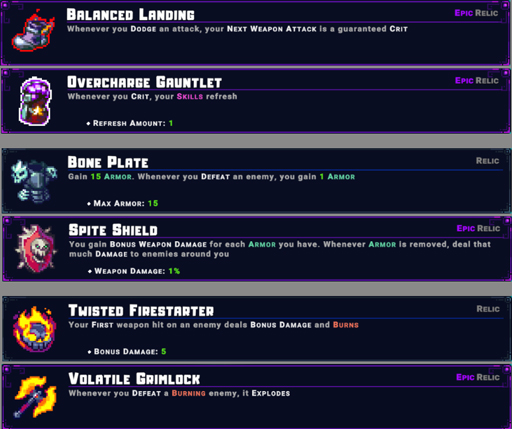
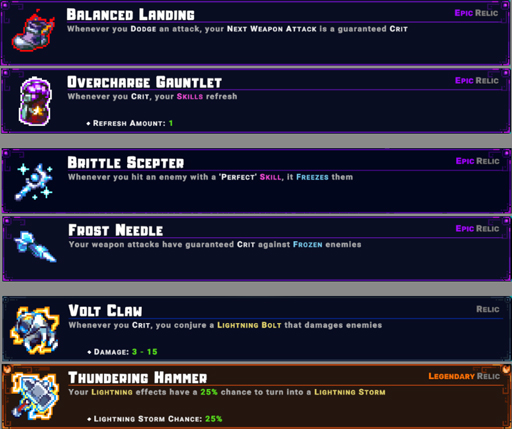
Relics mostly gave passive stat boosts to the player, which didn't noticeably affect gameplay. I redesigned their functionality to be more of a 'trigger and effect' system, where whenever the trigger was met, the effect happened. An effect could also act as a trigger, meaning Relics could combo with each other and make longer chains of effects. This added more replayability to make different Relic builds and look for broken combos.
The level exporation we ended up scrapping entirely. Instead of a dungeon-crawling style map, we went with a linear room-to-room approach where the player would choose from 1 of 2 rewards for their next room and the game determines what the layout and enemies are. Every room would have a reward now, where previously some rooms didn't and were just paths on the map.
We remade nearly all of the combat rooms since they could now be whatever size and layout we wanted them to be. We could also now have different rooms sizes based on the number of players in the game (up to 4 players) since the rooms didn't need to fit into a grid anymore.
Responsibilities and Creative Freedom
On Ember Knights I was given more responsibilities and also was allowed to stretch my creative muscles in various disciplines outside of design:
- During the Early Access period I managed the content to be developed, worked with a Producer to manage timelines and milestones, had final sign off on completed items, delegated junior designers, provided feedback and direction for artists, programmers, and audio designers
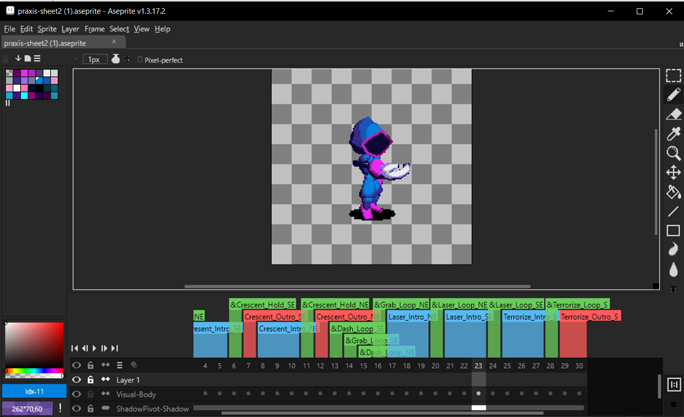
- To test out boss concepts quicker I made basic animated 3D models and converted them to sprites. We could get them hooked up, playable, and tested in game without taking up resources from the Art team
- Gave reference and feedback to the artists for level designs, character and enemy designs, animations, UI designs, icons, and more
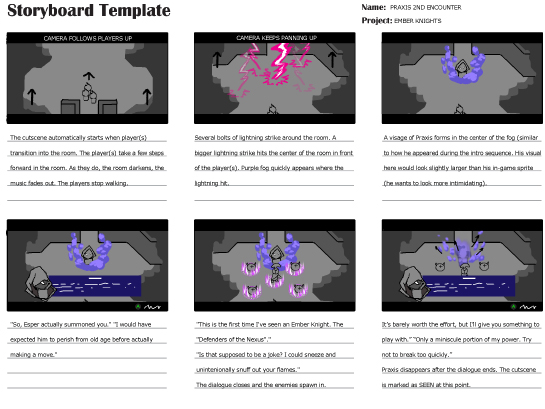
- Took over handling the main narrative, wrote all the dialogue for the game, storyboarded all the in-game cutscenes
- Worked directly with our external sound designers and composers
Legends of Starkadia
Senior Designer
System / Level / Enemy / Character Design
Narrative Development
UI/UX Design
Core System Design
- Turn-based combat system defining player-enemy action and turn orders, usable resources (HP, AP), special actions, and more
- Enemy 'weakness' system, more susceptible to certain damage types
- Quick time event input types for each character's attacks and abilities, bonuses for perfect timing
- Progression systems (equipment progression, xp levels)
- Character attacks and abilities, damage types, and combos
- Item / Gear design (stats, gear types, combos, xp)
- Boss and enemy designs for combat
- Level design, traversal mechanics, puzzles and interactions
- Enemy behaviours and patters outside of combat, player-chasing functionality
- UI/UX for all the various screens and menus
- Collaborated with a contract writer on the main story, character origins and personalities, dialogue, and more
- Quest lines for the main story, side quests for various worlds
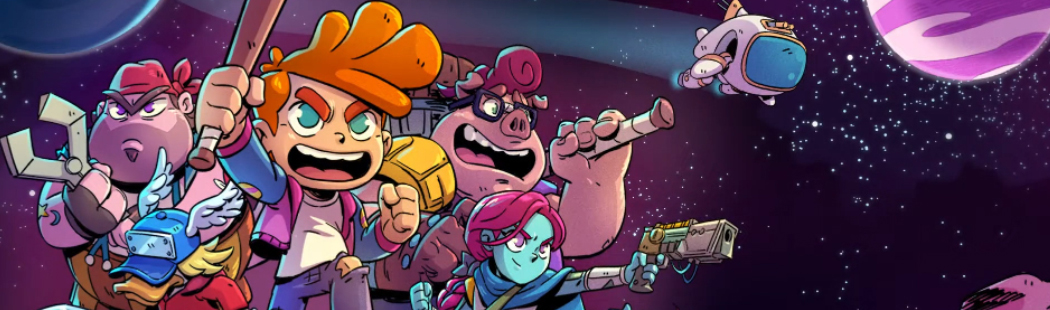
My time on Starkadia was mostly spent exploring ideas for turn-based combat mechanics, ideas for what the ‘overworld’ experience would be, some initial progression mechanics, and narrative work regarding the plot, the characters, the various worlds, and other pieces of lore.
The initial pitch for the game was as a rogue-lite with RPG elements, that then transitioned to be more like a regular RPG (not a rogue-lite). My role was to flesh out the elements from the pitch for a more ‘full’ RPG experience.
Kung Fu Z
Released July 2018 on Android, iOS
Designer
System Design
Combat / Content Design
Monetization / Live Ops
UI Design
Core System Design
- Meta progression, infinite ‘prestige’ mastery system, 14+ upgrades
- XP and level system, 15+ new combo attacks to unlock
- Sidekick system and progression, and design for 6 sidekicks
- Randomly generated loot system with stats, bonus perks, and infinite upgrade scaling
- 20 different character abilities
- 11 temporary Powerups to unlock and activate
- 12 Sidekick abilities
- 23 Enemy and Boss designs
- FTUE / Tutorials
- Designing, playtesting, and iterating all aspects gameplay and progression systems
- UI layouts for the majority of the game
- Monetization & IAP - Revives, consumable items, seasonal bundles, costumes, sidekicks, and others
- Live Ops content which included leaderboards, temporary events, seasonal content
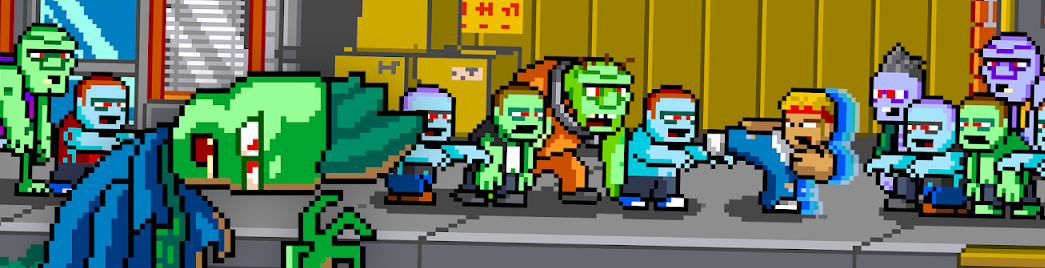
My role on KFZ was taking an early combat prototype and fleshing out the concept into a full mobile game experience. KFZ was later purchased by Trophy Games and renamed to Kung Fu Zombie.
Design and Development
Kung Fu Z was a new challenge for me because the prototype consisted mostly of a simple combat system and an art style, and I was given the task of fleshing out what the actual game would be for the first time.
From that base we would refine the combat more, I would come up with the flow of the game, new mechanics like abilities, gear generation, powerups, and sidekicks, the various progression systems, the monetization strategy, and nearly every other aspect of the game design.
I did a lot of research on other popular mobile games at the time for reference on how they were keeping players’ attention, what monetization strategies were the most successful, what level of direct interaction players were interested in, and how to apply all that information to the game.
KFZ’s development had a lot of fun moments where it was just myself and the sole programmer on the team riffing ideas and secrets and putting them into the game.
Dash Quest 2
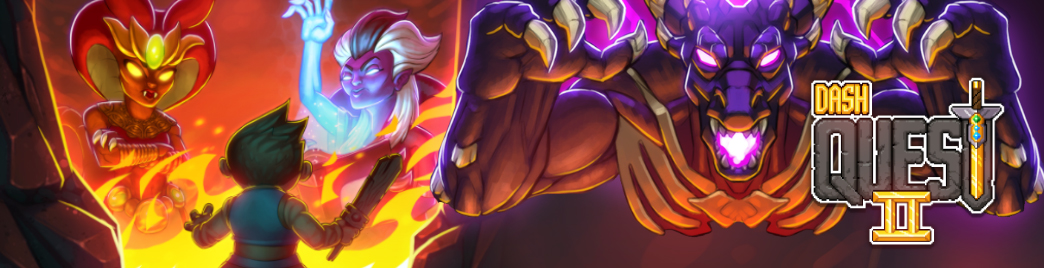
Released October 2019 on Android, iOS
Designer
System / Level / Enemy / Character Design
Combat / Content Design
Gameplay Programmer
Monetization / Live Ops
UI Design
Core System Design
- Player Progression systems (upgrades, skills, gear, and more)
- Abilities, ability unlock system, and ability upgrade system
- Relic system, 50+ passive effects, daily mystery Relics
- XP and level system, Skill trees and 40+ passive skills to unlock
- Gear unlock system and permanent bonuses for unlock progress
- Wave-based spawning system for levels and raids
- 140+ equippable pieces of gear and bonus effects
- 12 unique boss encounters
- 120+ enemies
- 70+ Levels
- 18 abilities with 30+ unique upgrades and multiple synergies/combos
- Designing and adjusting player and enemy infinite scaling
- FTUE / Tutorials
- Designing, playtesting, and iterating all aspects gameplay and progression systems
- UI layouts for the majority of the game
- 5 Live Ops Raids, 2 seasonal Raids
- Live Ops and Monetization (daily activities and bonuses, IAP purchases, subscription system, seasonal content, weekend events)
Dash Quest 2 is a level based ‘runner’ RPG that was a re-imagining of Dash Quest Heroes to be more mobile friendly. After I made a simple prototype to show off some gameplay changes and creating a pitch doc, I was given the opportunity to run a small team and create this mobile game.
The timeline from pitch to full launch was around 4 months. We re-used a lot of visual and audio assets and some base code from Dash Quest Heroes to make the game.
Dash Quest 2 was later purchased by Trophy Games.
Design and Development
Dash Quest 2 was a lot of work, but also a lot of fun. This was the first time that I got to pitch an idea, have it be approved, and see it through from beginning to end.
For most of the production the team was: a producer, a programmer, and me. This project taught me a lot about time management, organization, and the value of having a pre-production phase. We had very little time to hit all of our milestones once we got running, so using that time efficiently was paramount to our success.
Arena Stars
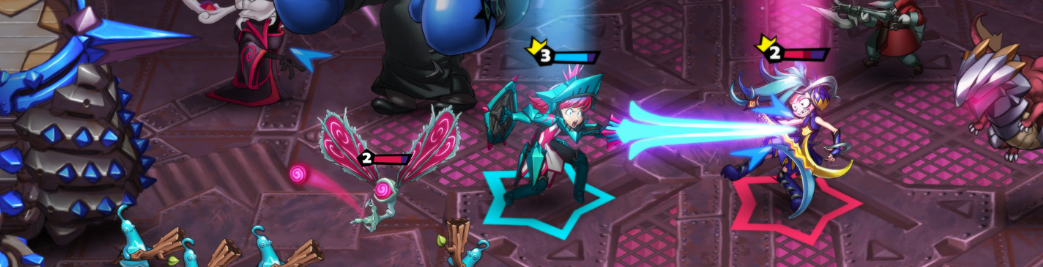
Released January 2019 on Android, iOS and Steam
Designer
Character Design
Combat / Content Design
Gameplay Programmer
Game Design
- Review and rebalancing for existing heroes, minions, spells
- Designed 5 new heroes, 31 new minions, 11 new spells
- 'Hero Mission' system, 72 unique missions (8 per hero) and their rewards
- Developed concepts and themes for 3 new ‘hero regions’
- Additional programming for heroes, minions, and spells
- Additional UI screen layouts
Arena Stars was nearing launch when I joined the project. My roles were to fill out the roster of existing content, design new content and systems for post-launch, and playtest / iterate / balance the existing content.
Design and Development
Before starting on new content I reviewed the existing heroes, minions, and spells, to make sure that each of them served an identifiable mechanical purpose / had their own identity. In some instances we had units that were nearly identical, such as ranged units with simple (and similar) behaviour of moving to a position and shooting.
Major reworks were outside of scope, but relatively simple changes like having one unit throw a projectile that bounced to other nearby targets, changing another to have a slow moving projectile that damaged enemies on the way to its target, and another that had a shorter range but pushed enemies backwards, along with stat tweaks, gave the units more varied use cases in different decks
Dash Quest Heroes
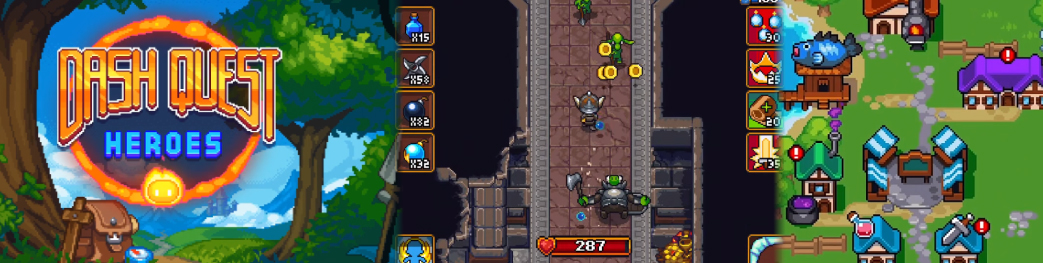
Released December 2017 on Android and iOS
Designer
Enemy and Boss Design
Level Design
Quest Design
Content Design
Android | iOS
Game Design
- Level design for all 13 areas, main and branching paths, shortcuts and secret areas
- 26+ enemies and 10 bosses
- 36+ equippable pieces of gear and 20+ gear perks
- Designed the Quest system and created all of the quest lines in the game for progressing the main story, unlocking new character classes, offensive tools, and new buffs from the main town
- Created all the in-game cutscenes using our custom editor
- Collaborated on the narrative, wrote all the dialog for the cutscenes and character encounters
- Playtesting, and iterating all aspects gameplay and progression systems
Dash Quest Heroes was the first commercial game I worked on. When I joined the project, many of the game and progression systems were already designed and implemented to a certain degree and some initial testing areas had been created. We worked on fleshing out the world, story, and characters, and I started designing the levels and how everything connected together.
As development progressed I would design all the boss encounters, how the main story and quests progressed, various cutscenes, and more content for the game (gear, perks, enemies, etc).
Dash Quest Heroes was later purchased by Trophy Games.
Design and Development
Dash Quest Heroes is an endless running RPG. The player runs forwards and can change between three lanes: left, middle, center. To change lanes they swiped left or right on the screen. To attack they tap the right-side of the screen. To block they tap the left-side of the screen. Bosses utilized mechanics that targeted specific lanes. Some attacks would have the boss choose which lane they were going to attack and the player had to dodge, and some other attacks would target where the player currently stood, meaning the player could want to stand in a specific spot to make sure attacks wouldn’t box them into a bad position.
Because DQH was a mobile game, bosses would also make use of tapping on the screen. In a Goblin Queen boss fight, servants would bring her food during the fight. The player would need to tap the servants before they reached the queen so they dropped the food. In a Dark Elf boss fight there were totems that activated and buffed the boss, and the player would need to tap them to deactivate them. Bosses also had attacks that couldn’t be dodged but could be blocked if the player timed their block correctly.
The player being able to swipe the screen to change their position let us experiment with various mechanics, like hazards on the ground that are restricted to certain lanes, buttons on the ground that needs to be pressed, dangerous sections of the ground that must be avoided. To take alternate paths the player had to swap to a certain lane. The branching paths of the level design and the Quest system were integrated together, where the player would need to take alternate paths to complete quests, or would need to complete quests to be able to take new paths.
Quests were fun to design because we had already established a lot of tools and mechanics to support some variety: there are multiple regions and paths in the world, we can place objects that the player won’t accidentally interact with, we had a ‘main town’ full of NPCs, etc. The tricky part of quest design was aligning them with the nature of the game itself, that being an endless runner where the player’s goal is to get as far as possible. If the player has a quest step that requires them to end their current run they might not be inclined to abandon to do so, especially if that quest step didn't give any tangible (or usable) rewards.
I ended up going with a solution where whenever there was a quest step that required the player to go back to town, they would always get an additional reward for that step, which would be gold or consumable items, to make it still rewarding for completing those progressive steps. Incentivizing players to progress a quest step, get a reward, and do another run was the best of both worlds for a mobile game.
Personal Projects
Spirit Vale
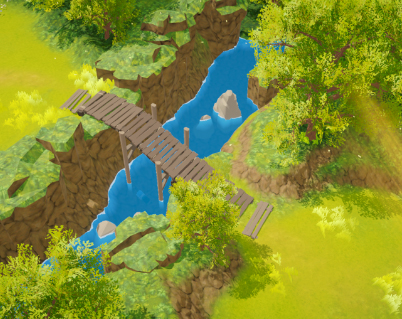
I contributed some map designs and gameplay input for the indie MMORPG Spirit Vale.
Maps were made using Unity's terrain system and purchased asset packs. Pretty fun learning project. It took me around 8 hours to finish my first map while I was learning the ins and outs.
Check out a walk through of one of the maps I re-did on Youtube
Pikmin-style Battler Concept
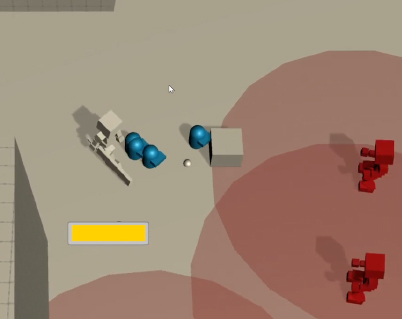
A gameplay concept where the player collects 'allies' that have different abilities and follow the player around. The idea would be that you collect them like Pikmin and run around with your big horde of allies fighting monsters.
Check out a short clip on Youtube
3D Auto Battler Prototype
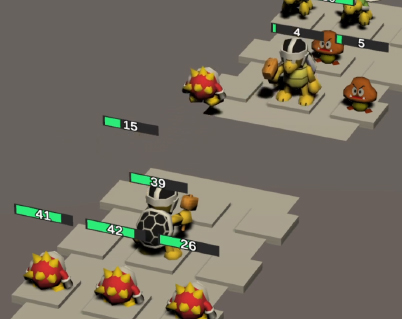
Prototype auto-battler combat system, converted from a 2D auto-battler system I had made previously and using some assets from another project.
I basically rewrote the code from scratch to be easier to work with and to try out some new stuff like characters being pushed around on the grid, and the position on the grid impacting what actions a character can do.
Check out a short clip on Youtube
SNES Online RPG
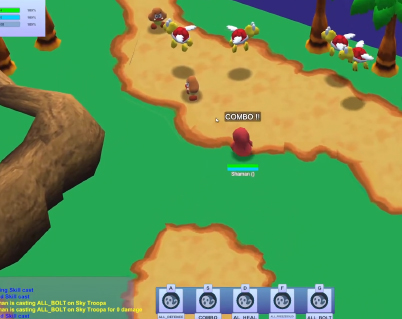
Passion project that was my introduction to more complex programming. It's a front-end client that connects to the back-end of an MMORPG emulator. The emulator was customized to play like an online version of Super Mario RPG.
The client was made with Unity and written in C#. Lots of stuff to learn like properly networking a game, dealing with packets, multi-threading, pathfinding, and more. If I could have gotten paid to work on it, it could have been a full time job.
The back-end emulator was written in C++ which I was just knowledgable enough with to get it to do what I want and not crash.
I made all the 3D art and textures. Sounds and music were taken from the SNES game.
Check out a demonstration on Youtube
Spooky Tower Defence
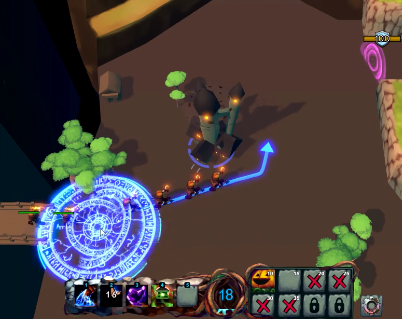
My first foray into game design and programming. Started out as a vehicle for making 3D characters but I ended up really enjoying the design side.
It was good as a learning project, but as a game it wasn't all that fun.
Check out a demonstration on Youtube
Connect
If you want to learn more about me, contact me on LinkedIn or BlueSky!